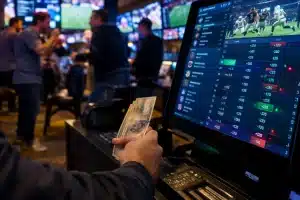
The surge in prediction market ads has become one of the clearest pressure points for regulated sportsbooks during the 2026 U.S. football season. As of October 31, 2026, the NFL regular season was still active, and the advertising fight around weekly game windows had moved beyond brand awareness. It was affecting customer-acquisition costs, compliance exposure, and how traditional operators defend attention without publishing unsourced odds or making aggressive claims about value.
As a sportsbook investigator, I read this shift less as a simple media-buying race and more as a jurisdictional test. Traditional sportsbooks operate under state-by-state licensing, tax, advertising, and responsible-gaming rules. Prediction marketplaces have argued from a different regulatory position tied to event contracts, which creates a different cost structure and a different advertising posture. That distinction matters because the same football audience may see both products during the same game window, while the obligations attached to those products are not always the same.
This analysis does not quote current betting odds. The research supplied for this article did not include operator-attributed live lines, and sportsbook prices move before kickoff. The focus is on market access, ad intensity, and the competitive effects around football betting demand.
Prediction Market Ads And NFL Attention Costs
Football is the highest-value acquisition period for many U.S. sportsbook brands, so a new buyer of sports media inventory can change the math quickly. Research notes show national TV ad spending for sports betting brands reached about USD 269.8 million through August 31, 2026, up roughly 40% from the same period in 2025. Prediction markets were described as a major driver of that increase, with Kalshi and Polymarket moving from little prior-year TV activity into meaningful national spend.
How Prediction Market Ads Reached Game Windows
The practical question for sportsbooks is not whether more advertising exists. It is whether prediction market ads are appearing close enough to football programming to compete for the same account sign-ups, deposits, and repeat engagement. The American Gaming Association reported that prediction market ad impressions made up 43% of digital sports betting ad impressions in early 2026, compared with 57% for traditional sportsbook ads, according to the AGA’s advertising trends report.
That share is significant because regulated sportsbooks already face high media prices during NFL windows. If a sportsbook had planned to concentrate promotions around Sunday games, Monday night matchups, or prime college football inventory, a prediction market buyer can bid up attention even without offering the same sportsbook product. The result is a higher cost to reach the same adult sports audience.
Research notes also indicate that traditional sportsbooks have responded with more profit boosts, bonus bets, and rewards offers. Those promotions may help retain customers, but they can reduce margins if deployed broadly. A sportsbook that increases incentives to match an advertising surge has to evaluate whether the retained handle justifies the extra promotional cost.
Why Media Inflation Hits Smaller Operators First
The largest sportsbook brands can absorb a short-term jump in football advertising costs more easily than smaller state-licensed operators. The pressure is sharper in competitive states where several operators fight for the same user base. When prediction market ads enter the same inventory, a smaller sportsbook may have fewer choices: spend more, accept reduced visibility, or rely on retention and product depth rather than broad media reach.
That is where market comparison becomes useful. Bettors who are legally eligible in their state may see a sportsbook offering spreads, totals, same-game parlays, player props, and live betting, while a prediction market may frame the football question as a contract. Those are not identical market structures. For more insights on these dynamics, bettors can visit Champion Sportsbook, a related site in the same network, which follows operator positioning and access issues tied to betting demand.
Regulatory Friction Around Football Advertising
The strongest concern is not only that ad spend rose. It is that advertising obligations may differ. Research notes show that in 2025, about 15% of digital sports-betting ads seen by consumers lacked required responsible-gaming messaging. By early 2026, nearly 43% of those ads, mainly from prediction markets, did not meet regulatory standards cited in the supplied research.
State Rules Versus Federal Market Claims
Traditional sportsbooks generally must satisfy state gaming regulators before launching, advertising, and accepting wagers in a jurisdiction. That framework can include age-gating, responsible-gaming language, self-exclusion rules, approved promotional terms, and limits on misleading claims. Prediction markets have drawn attention because their operators may assert federal derivatives treatment rather than state gambling status.
For regulated operators, this is not an abstract complaint. If one business must attach required warnings, limit certain language, and undergo state review while a rival product buys football ads under a different theory, the advertising contest is uneven. The issue also affects tax collection and complaint handling. State-regulated sportsbooks pay gaming taxes and operate under local enforcement. If activity shifts away from those channels, regulators may have less direct visibility into consumer behavior around football events.
Compliance Signals Matter As Much As Spend
Compliance details can be easy to miss in a crowded Sunday media schedule. Yet the presence or absence of required messaging is a practical signal for consumers and regulators. A football ad that looks like a betting ad to the public but does not carry the same required language can create confusion over who supervises the transaction and what protections apply.
That is why prediction market ads have become part of a broader legal and regulatory debate, not only a marketing story. The same issue has been tracked in related coverage of NFL sportsbook advertising pressure, where game-window visibility, product limits, and compliance claims were central to the analysis.
Trading Volume And Sportsbook Handle Signals
The advertising surge would matter less if demand were thin. The supplied research points in the opposite direction. During the first week of the 2026 NFL regular season, from September 7 through September 13, NFL prediction markets generated at least USD 1.035 billion in trading volume, with Kalshi accounting for about USD 983.36 million, according to Action Network’s volume report.
That figure is trading volume, not sportsbook handle, and the two should not be treated as identical. A sportsbook wager and a prediction-market contract can have different fee structures, liquidity mechanics, and settlement rules. Still, the number shows that football-related event trading reached material scale early in the NFL season.
| Market Signal | Reported 2026 Data Point | Sportsbook Relevance |
|---|---|---|
| Digital ad impression share | Prediction markets at 43% in early 2026 | Competes for the same football audience attention |
| Week 1 NFL trading volume | At least USD 1.035 billion from September 7-13 | Shows demand around football event contracts |
| Legal NFL sportsbook forecast | About USD 29.5 billion for the 2026 NFL season | Suggests regulated handle growth was nearly flat versus the prior estimate |
The nearly flat legal sportsbook forecast cited in the research is especially relevant. A market can be healthy and still face pressure if new products redirect marginal activity. If regulated NFL wagering was projected near USD 29.5 billion for the 2026 season, compared with a USD 29.4 billion estimate for 2025, the growth story is more muted than operators would prefer during a major football cycle.
What Sportsbooks Can Defend Without Chasing Every Ad

Traditional sportsbooks do not have to answer every media buy with equal spending. They can defend areas where prediction markets may not match the product. Market depth is one. NFL sportsbooks often compete across point spreads, moneylines, totals, player props, team props, in-play markets, parlays, and promotions tied to loyalty programs. Prediction-market contracts may be simpler in presentation, but they may not cover the same range of regulated betting options.
Product Depth Versus Promotional Cost
A sportsbook that leans only on bonuses risks training customers to wait for incentives. A stronger response is to make the product easier to compare: transparent bet rules, clear settlement terms, state-approved responsible-gaming tools, reliable withdrawals, and visible market availability before kickoff. Those factors matter during football windows when pricing and market access can change quickly.
Live betting is another dividing line. Regulated sportsbooks have invested heavily in in-game markets, but those markets carry operational risk, latency risk, and trading-management costs. If a sportsbook can offer stable in-play menus without overstating certainty, it has a product argument that does not depend solely on advertising volume.
Jurisdictional Access Is Still The Core Filter
Access remains the first question. A regulated sportsbook may be available in one state and not another. A prediction market may be marketed nationally while facing state-level objections or unresolved legal questions. Consumers should not assume that a product promoted during football programming is subject to the same regulator, complaint process, or responsible-gaming standards as a state-licensed sportsbook.
That distinction is not a recommendation for either product. It is a market-analysis point. Advertising can make two products look adjacent, but regulatory treatment, consumer protections, taxes, and available markets may differ sharply.
Prediction Market Ads During Football Season
Prediction market ads have changed the 2026 football advertising cycle by adding a high-spending competitor at the same time sportsbooks are trying to protect NFL audiences. The pressure shows up in media costs, promotional responses, regulatory scrutiny, and the comparison between trading volume and sportsbook handle.
For traditional sportsbooks, the safest strategic response is not simply to spend more. It is to clarify the value of regulated access: approved rules, responsible-gaming tools, state oversight, deep football markets, and transparent promotional terms. For regulators, the test is whether similar-looking football ads should carry similar consumer-protection signals. For bettors and market watchers, the key is to compare product structure before comparing price, because the ad slot does not tell the full story.