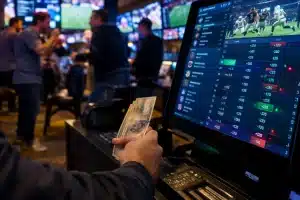
The Fanatics betting app entered a sharper phase on September 2, 2026, when Fanatics formally rolled its sportsbook, casino and prediction-market access into one combined product. For sportsbook competition, the key question is not whether one app can hold more features. It is whether a single account, one rewards system and state-by-state product controls can change how users compare prices, markets and promotions before major game windows.
This analysis does not quote odds. No operator-attributed lines were included in the research record, so there is no supported basis here for comparing current spreads, totals, moneylines or player props. Prices also move before kickoff. The better-supported view is structural: Fanatics is trying to narrow the gap with DraftKings and FanDuel by joining wagering, casino, loyalty and prediction products in one account experience.
Fanatics betting app Market Position
Fanatics is no longer just a challenger with a recognizable retail brand. Early 2026 data across 15 tracked U.S. states placed Fanatics at about 9% of online sports betting handle, behind DraftKings at roughly 31% to 34% and FanDuel at roughly 34%, but ahead of BetMGM at about 7%. Legal Sports Report also reported that Fanatics expected its betting and gaming marketing budget to rise from about $350 million in 2026 to possibly $1 billion in 2027, with total U.S. industry marketing spend potentially reaching $7 billion next year, according to Legal Sports Report.
Handle Share Sets The Starting Point
That 9% share gives Fanatics a real base, but it also shows how far the operator remains from the two dominant brands. In practical sportsbook terms, market share can affect depth. Larger operators often have more returning customers, more liquidity for pricing teams to observe, and more reason to post broad menus across major professional events. Fanatics can compete without matching every feature immediately, but users comparing apps tend to notice three things quickly: market availability, bet type variety and how fast prices refresh around lineup or injury news.
The integrated model may help Fanatics keep more users inside its system after account creation. A customer who checks a game line, then moves to casino or prediction markets, is still interacting with the same operator. That can improve retention. It can also make comparison shopping less frequent if rewards, wallet access and promotions are all tied together. For market competition, that is meaningful even before Fanatics catches DraftKings or FanDuel by handle.
Marketing Spend Raises The Temperature
The expected increase in marketing spend points to a more expensive acquisition fight. Promotion volume can be useful for consumers who already compare terms carefully, but it can also make the app feel louder. If users are seeing bonus bets, profit boosts, loyalty credits and market prompts in one place, the experience may become harder to assess calmly. The business goal is retention. The user need is clarity.
That tension matters during high-demand game periods. A sportsbook can offer a deep pregame menu and strong live betting tools, but if the interface pushes too many offers at once, users may miss line movement, limits, settlement rules or eligibility terms. The operator that wins attention is not always the operator that offers the clearest wagering decision environment.
Product Integration And User Experience
Fanatics’ September 2, 2026 rollout joined sportsbook, casino and prediction markets under the Fanatics Betting & Gaming app, with functionality adjusting by state legality. Axios also reported that Fanatics’ prediction-market strategy was driven partly by demand from users in states where traditional sportsbooks are unavailable, with tens of thousands opening the sportsbook app weekly in those states, according to Axios.
Fanatics betting app User Experience Tradeoffs
The Fanatics betting app has a clear convenience argument. A single wallet, one login and unified rewards can reduce friction for users who already understand which products are legal in their state. FanCash is central to that pitch, since the research record says users can earn it through bets, prediction trades and casino play, with redemption across merchandise, tickets, collectibles and wagering.
The risk sits in product boundaries. A sportsbook wager, a casino game and a prediction-market contract do not carry the same format, pricing logic or regulatory treatment. If the app presents them too closely together, users may treat them as interchangeable. That is not just a design issue. It can affect how people understand probability, settlement, limits and promotional value.
State Access May Feel Uneven
Auto-adjusting access by state law is necessary for compliance, but it can create an uneven user experience. A customer traveling across state lines may see different features appear or disappear. Another user may open the app expecting sportsbook access and instead find only other permitted products. That is manageable if the app explains restrictions clearly and early, not after the user has already moved through several screens.
For readers interested in additional discussions around betting-market structures, Sharp 9 provides valuable insights into how regulation and market dynamics affect operator comparisons. This related site in the same network offers perspective that focuses more on the broader market environment rather than specific betting picks.
Prediction Markets Add A Different Pressure Point

Prediction markets are the most disruptive part of the integrated strategy because they can reach users who may not have access to traditional sportsbook wagering. That does not make them a substitute for regulated sports betting in every state. It does mean they can compete for attention during the same sports calendar moments that sportsbooks depend on.
Demand Outside Sportsbook States
The research record says Fanatics saw meaningful app interest in states without traditional sportsbook availability. That helps explain why prediction markets became part of the core product plan. For Fanatics, the app is not only a sportsbook entry point. It is a way to keep a broader national audience connected to the brand, even where a standard sports betting menu is not available.
From a competition perspective, this puts pressure on pure sportsbook operators. If a customer can maintain an account, earn loyalty credits and interact with market-based products before sportsbook legalization reaches that state, Fanatics may have a head start when full wagering access becomes available. The size of that advantage is uncertain, and it will depend on state rules, product quality and how users respond once competing licensed sportsbooks enter the same market.
Promotions Need Guardrails
High promotional intensity can drive sign-ups, but it can also test responsible-gaming systems. VIP programs, self-exclusion controls and marketing suppression lists become more sensitive when one account touches several product types. If a user sets limits or opts out of one area, the app must avoid mixed signals from another area.
That is a difficult operational task. It requires clear segmentation, careful messaging and fast correction when records change. The more products tied to one wallet, the more important it becomes that compliance tools work across the full account, not just one vertical. For users, the practical question is simple: can the app show what is available, what is restricted and what protections are active without forcing them to search?
Fanatics betting app Competition Signals
The Fanatics betting app should be judged less by its novelty and more by measurable outcomes: handle share, user retention, complaint levels, responsible-gaming performance, market variety and price competitiveness. The research record supports a cautious view. Fanatics has enough scale to pressure established operators, but it remains well behind DraftKings and FanDuel in tracked online sports betting handle.
The strongest competitive asset may be the Fanatics ecosystem. Merchandise, collectibles, tickets, loyalty credits and wagering can all reinforce the same account relationship. That can reduce churn and make promotions feel more personal. Yet it can also blur the user’s sense of where shopping ends and wagering begins. Clear labels, plain terms and product separation inside the app will matter as much as the reward value itself.
For sportsbook users comparing operators around upcoming games, the most useful approach remains disciplined and evidence-based. Check whether the market menu is deep enough for the event. Compare live betting responsiveness where legal. Read promotional terms before assigning value to bonus offers. Confirm state access. Watch how the app handles responsible-gaming tools. The Fanatics betting app may raise competitive pressure, but user experience will depend on execution, not just integration.