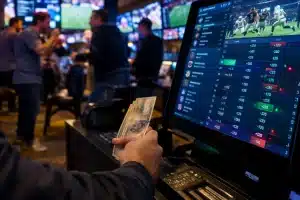
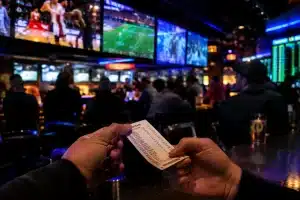
Pennsylvania microbets have moved from a sportsbook product question to a policy test for regulated betting. The issue is not whether live wagering can add depth to legal markets; it is whether single-play props create a faster betting loop than regulators are willing to accept. As of October 24, 2026, the state debate sits between two competing market goals: offering enough in-game variety to keep bettors inside regulated sportsbooks, and reducing the speed and frequency of bets tied to one pitch, one possession, or one snap.
The regulatory pressure sharpened after a 126-page study published on July 13, 2026, by Pennsylvania’s Joint State Government Commission recommended prohibiting in-game microbets and curtailing VIP programs, citing addiction concerns, according to The Philadelphia Inquirer. That recommendation put sportsbook menu design under direct review. It also raised a harder question for operators: if live markets lose the shortest-duration props, how much engagement shifts to standard in-game sides, totals, team props, and player props?
No current operator odds are quoted here because this is a policy and product-market analysis rather than a matchup preview. Live odds move before and during games, and any price comparison should come from official sportsbook screens in a bettor’s legal jurisdiction at the time of review. For readers interested in comprehensive analyses of the betting product landscape, Sharp-9 market coverage offers another reference point for how betting products are discussed.
How Pennsylvania microbets Changed Live Betting
Traditional pregame betting gives markets time to absorb injury news, matchup data, weather information, and public money. Live betting compresses that cycle. Microbetting compresses it even more. A market on the result of a single play or action can appear, close, grade, and reopen in a matter of moments. That speed is the core attraction for some bettors and the core concern for policymakers.
Pennsylvania microbets And Single-Play Pricing
Pennsylvania microbets sit at the narrowest end of the prop market. A standard player prop may depend on an entire game. A live team total may depend on the remaining clock, score state, pace, and possession count. A microbet, by contrast, can isolate one immediate event. That structure changes how bettors experience risk. It also changes how sportsbooks manage pricing, latency, suspension rules, and data-feed accuracy.
For operators, the appeal is clear. More decision points during games can increase handle opportunities without waiting for a new quarter, inning, or half. For risk teams, the challenge is also clear. A micro-market needs pricing that can account for game context quickly, then close before the play begins. In faster sports, the time between offer and outcome can be extremely short. That creates less time for price shopping, less time for reflection, and less room for manual review.
Market Depth Versus Betting Velocity
The market-depth argument from sportsbooks is strongest when microbetting is viewed as a regulated alternative to offshore or illegal products. If licensed operators cannot offer certain live props, some bettors may look elsewhere. That is a real policy concern because regulated books provide geolocation, age checks, responsible-gaming tools, tax reporting, and state oversight. Offshore sites do not provide the same state-level protections.
The counterargument is that betting velocity matters. A broader menu is not always neutral if it materially increases the number of bets a person can place during a single game. The risk profile of one pregame wager on a football spread differs from repeated single-play props during every drive. That difference is why the Pennsylvania debate is not only about product variety. It is also about cadence, prompts, limits, and how frequently a platform asks a bettor to make another decision.
Responsible Gambling Data Behind The Debate
The policy push is occurring against a larger online gambling backdrop. The 2025 Pennsylvania Interactive Gaming Assessment, based on a survey of about 3,500 adults, found that 30% of Pennsylvania adults gambled online in the past year, up from about 20% in 2024; it also estimated adult problem gambling prevalence between 2.5% and 6.4%, with about 28% to 30% considered at-risk, according to Penn State’s Social Science Research Institute. Those figures do not prove that microbets alone cause harm, but they explain why lawmakers are examining faster online formats.
Why VIP Programs Became Part Of The Same Fight
The microbet controversy has not stayed confined to the bet slip. Pennsylvania’s July 2026 study also addressed VIP programs, and HB 2879, introduced on October 21, 2026, targets both microbets and VIP structures. That pairing is significant from a market-analysis perspective. Microbetting increases the number of possible wagers; VIP programs can increase the incentives for frequent play. If both are aimed at high-volume users, regulators may treat them as linked parts of the same risk model.
The research provided for this analysis states that HB 2879 would define a microbet as a proposition wager offered live during a sporting event on the outcome of a single play or action. The bill would also set new controls around deposits, losses, and time. Those proposals would change how operators segment customers, design retention offers, and monitor account behavior. They would also likely reduce the use of fast, highly personalized prompts during live events.
Advertising And Automated Targeting
The bill language described in the research would restrict sign-up bonuses, AI-driven individualized marketing tied to loss or risk, autoplay features, and advertising aimed at youth. From a sportsbook standpoint, those limits would affect acquisition, retention, and reactivation. From a regulator’s standpoint, they would address the concern that frequent bettors may be pushed toward more betting at moments of vulnerability.
Comparable questions about machine-driven sportsbook promotion have already appeared outside Pennsylvania. A related discussion of sportsbook AI marketing in Massachusetts shows how advertising rules and responsible-gaming standards can create operator risk even when the disputed product is not a single-play wager.
Sportsbook Market Effects If Restrictions Pass

If Pennsylvania restricts microbetting, the first visible change would be the live menu. Bettors would still likely see regulated live markets, but the menu could shift toward broader outcomes: in-game moneylines, spreads, totals, period markets, team props, and player props that are less dependent on one immediate action. That would not end live betting. It would change the market rhythm.
Pricing, Liquidity, And Product Substitution
For Pennsylvania sportsbooks, losing single-play props would reduce one category of high-frequency inventory. Operators may respond by improving depth in slower live markets, especially around major professional games where in-play liquidity is already stronger. A football game, for example, may still support drive-result markets, quarter lines, and player yardage updates. A baseball game may still support inning markets and adjusted totals. The key difference is that each market would generally give more time between offer, decision, and settlement.
There is also a substitution question. Some bettors who use micro markets for entertainment may move to standard live props. Others may bet less often. Some may compare regulated options with offshore menus, which is where policymakers face a trade-off. A strict ban could reduce high-speed betting inside the licensed system, but it may also push demand toward products with fewer consumer protections. The size of that shift is uncertain based on the available research.
- For bettors: fewer single-play props would mean fewer rapid-settlement markets, but not necessarily fewer regulated live betting options.
- For sportsbooks: product teams would need to rebuild engagement around slower live markets and clearer account controls.
- For regulators: enforcement would depend on precise definitions of single-play or single-action wagers.
Why Operator Comparison Still Matters
Even without micro markets, sportsbook comparison remains relevant. Regulated operators can differ in hold, market availability, bet limits, suspension timing, cash-out rules, and responsible-gaming tools. Those differences matter most during live betting because prices change quickly and markets can disappear after each play. If Pennsylvania microbets are restricted, bettors evaluating legal books would still need to compare how each operator handles in-game pricing and account safeguards.
That comparison should be cautious. No bettor should assume that a larger prop menu is automatically better. Market count is only one factor. Clear limits, transparent settlement rules, accessible cooling-off tools, and fewer aggressive prompts can also affect the quality of a regulated sportsbook experience. For analysts, this is where product depth and responsible gambling meet.
Pennsylvania microbets Policy Watch
The next stage of the Pennsylvania debate will likely turn on definitions and enforcement. If lawmakers ban wagers on a single play or action, sportsbooks will need clear guidance on what separates a prohibited microbet from an allowed live prop. A market on the next pitch may be easy to classify. A market on the result of a drive, inning, possession sequence, or period may be less clear without detailed rules.
Pennsylvania microbets now serve as a test case for how regulated states treat speed inside legal wagering. The state can preserve live betting while removing the shortest-duration props, or it can seek a narrower rule that targets only the fastest and most repetitive markets. Either path would affect sportsbook product design, user retention, and the balance between legal-market appeal and responsible-gaming controls. The available evidence supports caution, not certainty: online gambling participation has risen, problem-gambling indicators are material, and microbetting’s fastest formats deserve close regulatory review before they become a standard part of every in-game menu.