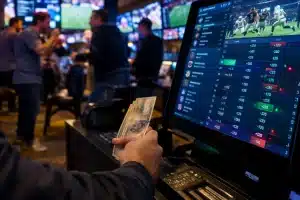
Live Betting Trends sit at the center of NFL Week 9 on November 2, 2026, but the data calls for some restraint. The available research shows a clear gap between what bettors say they prefer before a season and what they actually do once games start. That distinction matters for sportsbook market analysis because in-play markets are not just a side product. They are now part of the main NFL betting routine for many users.
This is not a picks column, and it does not quote any current operator line because the supplied research set does not include operator-attributed Week 9 odds. Lines can move before kickoff and during every possession. The more useful question here is how bettors are using live markets, how books are managing risk, and where market depth appears stronger or thinner during a busy NFL window.
Live Betting Trends In Week 9 Context
NFL Week 9 arrived with consumer behavior already shaped by the first half of the regular season. Bettors still show a strong attachment to pregame markets, especially spreads and moneylines. At the same time, live betting has become far too common to treat as a niche behavior. The tension between those two habits is where the market gets interesting.
Live Betting Trends And Consumer Intent
An August 2026 survey of 926 U.S. NFL bettors found that 34% expressed an advance preference for live betting, yet 84% said they placed at least one live bet during the 2025-26 season, according to the Optimove NFL betting report. The same survey showed point spreads at 60% and moneylines at 59% as the leading bet types, while planned interest in over/unders fell from 52% to 43% and parlays fell from 38% to 29%.
Those figures suggest a market where pregame structure still drives initial betting decisions. A bettor may begin with a spread, a moneyline, or a total, then use live markets after seeing pace, injuries, field position, or coaching choices. For sportsbooks, that creates two different risk windows: the pregame book built across several days, and the in-game book that reprices after drives, turnovers, penalties, and timeouts.
These Live Betting Trends also point to a difference between stated preference and actual product use. A bettor may not describe live betting as a favorite format in August. Once a game is on, though, a live menu sits in front of the user with changing spreads, totals, team totals, player props, and drive-based options. That design helps explain why actual participation can outrun stated preference.
Consumer Preference Versus Actual In-Play Behavior
The survey also found that 64% of bettors placed stakes once a week or more during the 2025-26 season, while 19% did so at least once a month. That level of frequency supports steady NFL engagement across the regular season. It does not prove that every user is betting live every week, but it does show that sportsbooks are serving a recurring audience rather than only one-off event traffic.
Pregame Anchors Still Matter
The continued strength of spreads and moneylines matters because live prices often begin as a reaction to the pregame number. If a favorite closes at a certain spread, the in-play spread after an early touchdown or a three-and-out is not created in isolation. It reflects the pregame market, game state, remaining time, possession, injuries, and book exposure.
For consumers comparing regulated markets, the key is not just whether a live price appears. It is whether the market stays posted, how quickly it suspends, how wide the spread is between sides, and whether the same game carries enough prop variety. A related analysis of live betting margins explains why in-play pricing often carries a higher cost than pregame markets.
Product design also shapes behavior. A live betting screen with fast updates can encourage short-horizon decisions. That is why responsible comparison matters. Bettors evaluating markets should be aware of price movement, bet confirmation delays, and limits. This is especially relevant in NFL games, where one injury update or replay review can change the fair price before a user finishes reviewing the market.
Market Depth, Handle, And Pricing Volatility

Market depth is not only about how many bet types are displayed. It also concerns how much money a book is willing to take, how consistently markets remain available, and whether pricing holds up when public demand clusters around the same side. NFL volume gives operators a deep pool of action, but handle can still swing from week to week.
Handle Swings Show Operator Risk
New York sportsbook handle rose from $483.3 million in the first week of September 2026 to $594.6 million, then $611.1 million, before dipping to $573.4 million for the week ending September 27; sportsbook hold also moved sharply, sliding from about 9.3% one week before rebounding, according to Legal Sports Report.
That kind of movement matters for Week 9 because live betting adds more moments for a sportsbook to take and adjust risk. Pregame markets can be shaped across several days, with injury reports and market consensus developing over time. In-play markets compress that work into seconds. A sportsbook that hangs a live total after a stalled drive may quickly adjust if pace changes, a defensive injury appears, or a team shifts from run-heavy to pass-heavy offense.
Live Betting Trends in NFL markets are also tied to operator technology. Faster data, automated trading tools, and sharper suspension rules can affect which markets remain available. Readers interested in the technical side of these operations might explore sportsbook software market notes, which provide insights into how platforms handle the rapid updating and settlement required by live markets.
- Compare pregame and live spreads before assuming a midgame number is favorable.
- Watch whether live props stay open or disappear during key possessions.
- Check whether regulated books differ on hold, limits, and confirmation timing.
- Avoid treating fast-moving prices as stable; they can change before acceptance.
None of those checks requires a prediction about the winner. They focus on market quality. That distinction is useful in Week 9 because the NFL schedule creates overlapping windows, public teams draw attention, and late injury information can alter both pregame and live prices.
NFL Week 9 Live Betting Trends
For November 2, 2026, the clearest read is that live betting demand is real, but it sits beside older betting habits rather than replacing them. Spreads and moneylines remain the main entry points for many NFL bettors. Once games start, live markets give those same users more chances to react to tempo, possession, and game script.
What The Week 9 Market Signals Can And Cannot Say
Live Betting Trends can show participation, preference gaps, and operator pressure. They cannot, by themselves, identify a correct side, total, or prop. The research supports the view that many bettors use in-play markets during NFL games, and that sportsbook handle can rise or fall sharply across weeks. It does not support claiming a guaranteed advantage from any single Week 9 angle.
The cautious read is that NFL Week 9 should be treated as a market comparison exercise. Bettors and analysts can examine where live spreads differ from pregame anchors, where totals reprice after pace changes, and where books suspend markets during uncertain moments. That gives a clearer view of market dynamics without relying on unsourced odds or promotional claims.
Live Betting Trends are most useful when they are tied to verified data, operator-specific pricing, and a clear understanding that prices move quickly. Week 9 offers another real-time test of how consumer behavior, sportsbook risk controls, and NFL game flow interact across regulated markets.